


Rotten Tomatoes - Movies & TV
Fandango
When I want to decide whether a movie is worth my evening, I usually need more than a poster and a short plot summary. I want a quick sense of how critics reacted, how audiences responded, what people are discussing, and whether there is any recent news that changes the context. Rotten Tomatoes - Movies & TV, developed by Fandango, is built around that decision rather than around simply displaying a large catalog.
I approached it as an entertainment app for the moment before pressing play: browsing a title, checking its reception, reading opinions, and looking for conversation around it. That makes it more focused than a general streaming app. It does not try to replace every service on your phone; instead, it works as a layer of research between “What should I watch?” and “Start watching.”
The app is free, carries a Teen content rating, and runs on Android starting with version 8.0. Its current version is 1.1.0, and it has passed the one-hundred-thousand-install mark. Those details make it easy to try without committing money, although the real question is whether its combination of reviews, social elements, and news is useful enough to become part of your regular viewing routine.
How I decide whether Rotten Tomatoes is worth keeping
My first decision criterion is speed. If I am choosing between several films after a long day, I do not want to read a full review for each one. A useful companion should help me narrow the list quickly, then give me enough context to avoid making a choice based on one isolated opinion. This app is most convincing when used for that shortlisting stage.
The second criterion is the balance between professional criticism and audience reaction. Those perspectives answer different questions. Critics may help me understand craft, structure, performances, or ambition, while audience response can reveal whether a title is broadly enjoyable, divisive, or likely to frustrate viewers expecting something else. I find the combination more useful than relying on either side alone.
Related News

Why WhatsApp Messenger Still Makes Everyday Communication Feel Easy

Jurassic World: The Game Is the Better Dino Tycoon for Strategic Players

Threads in Real Life: Who Should Join, Lurk, or Leave

How SHEIN Turned Shopping Into an Endless Content Feed

How to Make Fortnite Feel Smarter on Mobile

Should You Switch to Microsoft Outlook on Mobile?
The third criterion is whether the surrounding information improves the choice. A review score by itself can become a shortcut that hides useful nuance. The social and news focus gives the app a chance to show why a title is attracting attention, what people are saying, and whether a release is part of a larger conversation. That is especially helpful when I am deciding between a familiar film and something I have barely heard about.
I also consider how much friction an app introduces. A movie guide should not make me repeat the same search across several screens or force me to maintain a complicated system of lists. I want to open it with a question and leave with a practical answer: watch now, save for later, or skip unless the subject particularly interests me.
A focused way to narrow down a crowded evening
In everyday use, I would open the app while deciding what to watch with friends. One person might prefer a well-reviewed drama, another might want something entertaining and easy, and someone else may be curious about the title currently being discussed online. Instead of arguing from memory, I can use the app to compare the reception of the candidates and then read enough context to explain the choice.
Gallery
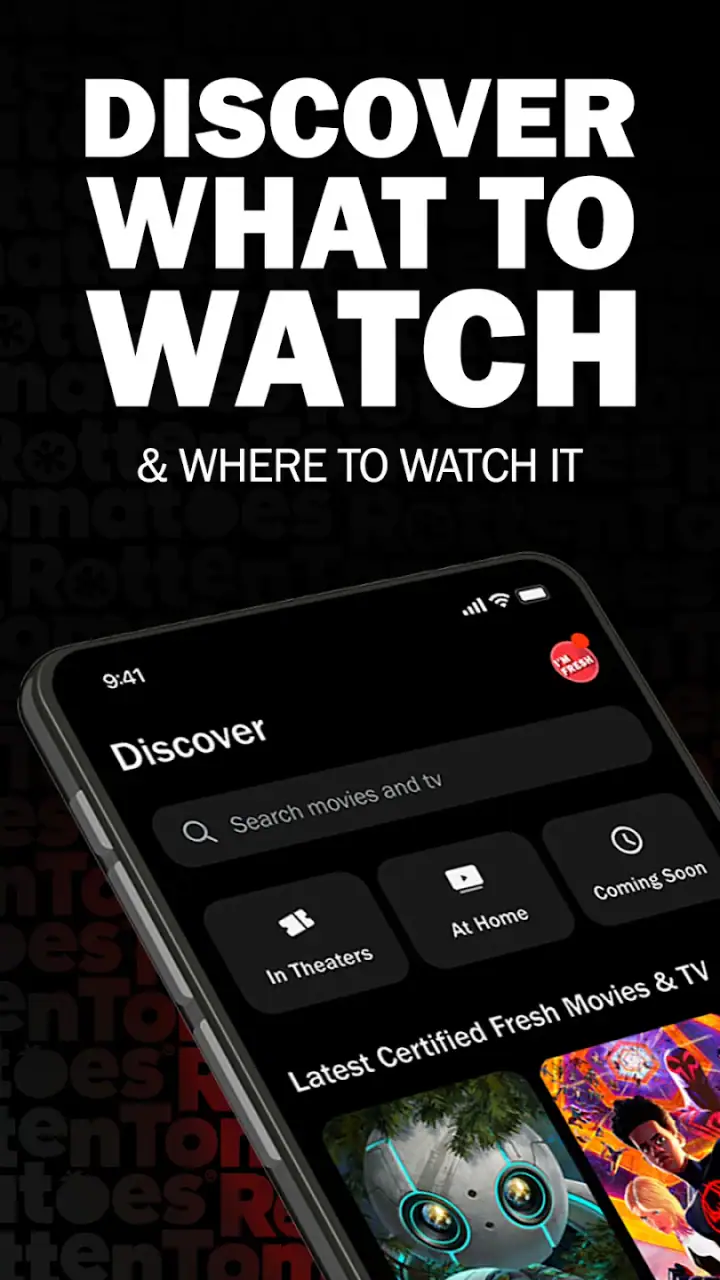
That workflow is more valuable than simply checking a single score. I pay attention to disagreement. A title with strong critical enthusiasm but a less enthusiastic audience response may be a better choice for someone who enjoys challenging cinema than for a group seeking uncomplicated entertainment. Conversely, a film that critics treat cautiously but audiences enjoy can be exactly right for a relaxed night.
The most useful habit is to treat the app as a filter, not a verdict. I use its information to decide what deserves my time, but I do not let one percentage or one popular reaction make the entire decision. That approach prevents the common mistake of dismissing a movie before understanding what kind of viewer it suits.
Reviews become more useful when I read for patterns
When I look at reviews, I try to identify repeated observations rather than chase the highest or lowest comment. If several opinions mention pacing, tone, or a particular performance, that tells me more about my likely experience than a single enthusiastic sentence. The app’s review-centered design encourages this kind of quick comparison, especially when I already know what matters to me.
For example, I may be willing to accept a slow opening if the payoff is strong, but I may avoid a title if the same criticism concerns a confusing story. Someone else may make the opposite choice. The practical value is not that the app decides for us; it helps us connect other people’s reactions with our own preferences.
This is also where the app can be more useful than a streaming service’s recommendation row. Streaming recommendations are usually designed to keep me inside that service. Rotten Tomatoes - Movies & TV is better suited to the question that comes first: which title deserves attention before I worry about where it is available?
Social context adds a second layer to movie research
The social side matters when I want to know whether a title is becoming a shared conversation. That can help in two opposite ways. I might choose a film because I want to join a discussion, or I might avoid it temporarily because the online conversation has already revealed more than I want to know.
I appreciate this distinction because entertainment choices are not always private. A movie can be worth watching for its quality, for its cultural impact, or simply because friends are talking about it. A news and social feed gives me a broader reason to open the app than checking a score once and closing it.
There is a trade-off, though. Social attention can pull me toward whatever is loudest rather than whatever is best for my mood. I have to stay aware of that bias. If I open the app without a clear intention, the most discussed title may dominate my attention even when a quieter, better-fitting choice is available.
Where the app wins against familiar alternatives
Compared with a streaming service’s built-in suggestions, this app wins at independence of thought. A streaming catalog naturally emphasizes what that particular service wants me to watch or what it can offer in my region. Rotten Tomatoes - Movies & TV is more useful before that stage, when I am comparing titles without tying the decision to one platform.
Compared with a general web search, it offers a more concentrated entertainment context. A search engine can find reviews, news, and reactions, but the experience often becomes a chain of separate pages with different layouts and different levels of detail. Here, the purpose is clearer: investigate movies and television, compare reception, and follow the surrounding conversation.
Compared with a dedicated social network, the app has a stronger subject boundary. A general social feed may contain movie discussion, but it also contains everything else. This narrower focus is helpful when I want entertainment information without sorting through unrelated posts.
Compared with a personal watchlist, it provides discovery and context rather than just storage. A list can remind me what I planned to watch, but it cannot by itself explain why a title is receiving attention or help me reconsider an old choice. I see the two tools as complementary: a personal list remembers my intentions, while this app helps me refine them.
Three practical ways I would use it
- For a group decision: I would compare two or three candidates, look for differences between critic and audience reactions, and choose the one whose trade-offs fit the group rather than automatically selecting the highest score.
- For a busy weeknight: I would use the review and news context to eliminate films that require a particular mood, then keep the shortlist small enough that choosing does not become another chore.
- For discovering outside my usual habits: I would browse titles receiving attention, then check whether the reasons people praise or criticize them match what I personally enjoy.
A less obvious use is preparing for a conversation. If a film is likely to come up at work, with friends, or online, the app can help me understand the broad reaction before I watch it. I would still avoid reading too deeply if spoilers matter, but a quick look at the surrounding discussion can tell me whether I should watch first and investigate later.
Where another type of app may fit better
This is not the right choice for every viewing problem. If my main goal is to play a movie immediately, a streaming app is more direct. It already knows what is available in its own catalog and keeps the path from discovery to playback short. Using a separate review app first may feel unnecessary when I have already decided what to watch.
If I mainly want personalized recommendations based on my viewing history, a service built around tracking and recommendation may fit better. Rotten Tomatoes - Movies & TV helps me interpret reception, but reception is not the same as a deeply personal taste profile. I may still need to apply my own judgment, particularly when my preferences differ from the mainstream.
If I want spoiler-free, long-form criticism, a publication or critic I trust may be a better destination. The app’s strength is breadth and quick context. A specialized reviewer can offer a more sustained argument about a film’s themes, technique, and meaning. I would use both differently rather than expecting one to replace the other.
It may also be a poor fit for someone who finds ratings stressful. Some viewers enjoy choosing without outside influence and would rather follow a friend’s recommendation or browse randomly. For them, the app could turn a simple pleasure into research. That is a genuine limitation of any review-led entertainment tool, not a problem solved by adding more information.
The cost of switching from my usual routine
Because the app is free, the financial cost of trying it is low. The larger cost is attention. I have to decide whether checking another source improves my choices or simply delays them. If I already spend too long comparing films, adding one more destination could make the problem worse.
My solution is to give it a defined role. I would open it when I have several options, when a title is unfamiliar, or when I want context around a release. I would not use it for every single viewing decision. That keeps the app from becoming a gatekeeper between me and entertainment.
There is also a habit cost. Once I begin comparing critical and audience reactions, I may start judging films before experiencing them. To avoid that, I would check the broad context first, make a provisional choice, and stop researching once I have enough information. The app works best when it shortens uncertainty rather than encouraging endless comparison.
For families, the Teen content rating is worth considering before handing the device to younger viewers. The app is about movies, television, reviews, social discussion, and news, so the surrounding material may not suit every child even when the intended viewing choice is harmless. I would treat the rating as a reminder to supervise use according to the viewer’s age and maturity.
What the current release means for new users
The current version is 1.1.0, which presents the app as a relatively early product experience rather than a tool I would assume has every refinement of a long-established platform. I would approach it with realistic expectations: the central value is the focused combination of reviews, social context, and news, while the smoothness of my routine will depend on whether those elements match how I already choose entertainment.
Its average rating is 4.4 from around four thousand six hundred ratings, with roughly one thousand three hundred written reviews. That level of response suggests that many users find the concept worthwhile, but I would still read feedback with care. A rating tells me that the app is broadly landing well; it does not guarantee that its approach fits my particular habits.
The install count, now above one hundred thousand, also makes the app feel established enough to test without treating it as an obscure experiment. Still, popularity is not the same as personal usefulness. The decisive question is whether I regularly need help comparing movies and television shows, rather than whether other people have installed it.
Small habits that make the experience better
I would begin with a specific question instead of opening the app aimlessly. “Which of these two films is more suitable for tonight?” is better than “Show me something good,” because it gives the review and social information a practical job. This also reduces the chance that trending discussion will dictate my choice.
I would separate discovery from commitment. First, I would use the app to find promising titles and understand their reception. Then I would check my available viewing service separately. This two-step process avoids confusing “well regarded” with “available to me right now,” a distinction that can save time when the final choice has to happen quickly.
I would also compare audience and critic reactions before reading individual opinions in depth. A mismatch between the two is not automatically a warning; it is a prompt to ask what kind of experience the film offers. That single habit gives the app more value than treating its review area as a leaderboard.
Finally, I would be careful around news and social discussion when I plan to watch something soon. Even without seeking explicit spoilers, a lively conversation can reveal expectations, twists, or major reactions. I would use the broader context after viewing when possible, and keep pre-viewing research focused on the basic decision.
My recommendation for different kinds of viewers
I recommend Rotten Tomatoes - Movies & TV to people who often hesitate between several movies or shows and want a fast, organized way to understand reception. It is particularly useful if you like comparing critic opinion with audience response, follow entertainment news, or want to know why a title is receiving attention before committing an evening to it.
I would also recommend it to viewers who move between different streaming services. The app makes more sense as a neutral research stop than as a playback destination, so it can help you decide what deserves a search across your subscriptions or rental options.
I would skip it if I already know exactly what I want to watch, if I prefer completely unfiltered discovery, or if my priority is one-tap playback. In those situations, a streaming app, a trusted critic, or a simple personal list may be more efficient. Adding this app would only create another step without solving a real problem.
My final view is positive, with one important condition: use it as a decision aid, not as an authority. The combination of reviews, social conversation, and news gives me more useful context than a basic catalog, and the free price makes experimenting easy. Its best contribution is helping me ask better questions about a title before I watch it.
For viewers who want context before pressing play, this is an easy app to keep available. I would open it when the choice is unclear, limit the research to what I actually need, and let my own taste make the final call. That balance is where Rotten Tomatoes - Movies & TV feels most worthwhile.
FAQs for Rotten Tomatoes - Movies & TV
What is Rotten Tomatoes – Movies & TV used for?
Rotten Tomatoes – Movies & TV helps you discover movies and television shows, check critic and audience ratings, read reviews, watch trailers, and decide what to watch next. Its scores, including the Tomatometer and audience rating, provide a quick overview of reception, while cast information, release details, genres, and streaming availability can help you explore titles in more detail.
Are the ratings and reviews on Rotten Tomatoes reliable?
Rotten Tomatoes is useful for comparing critical and audience opinions, but its ratings should not be treated as an absolute judgment of quality. The Tomatometer reflects the percentage of approved professional reviews, while the audience score represents user reactions. A high percentage does not necessarily mean every reviewer loved a title, so reading individual reviews can provide helpful context.
Can I watch movies and TV shows directly in the app?
The app is primarily designed for discovering and evaluating entertainment rather than serving as a universal streaming player. Depending on your location and the title, it may show where a movie or show is available to stream, rent, buy, or watch on television. Availability can change frequently, and you may need a separate subscription or third-party streaming application.
Does Rotten Tomatoes – Movies & TV require an account or subscription?
You can generally browse titles, ratings, trailers, and other basic information without paying for a subscription. Creating an account may provide additional options, such as saving favorites, tracking films or shows, and receiving a more personalized experience. Features and account requirements can vary by platform and region, so checking the current app details is recommended before downloading.
Is Rotten Tomatoes – Movies & TV available on both Android and iPhone?
Rotten Tomatoes has offered mobile access for Android and iOS users, although availability, supported devices, and specific features may differ depending on your country and operating-system version. Before installing, review the official Google Play Store or Apple App Store listing to confirm compatibility, required permissions, app size, recent updates, and whether the version available in your region includes all expected features.
Pros
- Quick access to critic and audience scores in one place.
- Useful filters help narrow down movies and TV shows.
- Trailers and cast details make discovery more convenient.
- Personalized recommendations can highlight new viewing options.
- Available ratings help compare titles before choosing what to watch.
Cons
- Some features and content may vary by region.
- The app focuses on discovery
- not watching movies or shows directly.
- Reviews can be subjective and may not match your preferences.
- Frequent promotional content can make browsing feel cluttered.
- Streaming availability may require checking several other services.


